

 Accused war criminal Ben Roberts-Smith is spotted on the Gold Coast after being granted bail in a Sydney court - as his support network assembles
  Airline Bankrupted by Trump’s Soaring Fuel Prices Pleads for Bailout
  Rep. Sam Liccardo Probes Suspicious Oil, S&P Futures Trades Ahead Of Trump's Iran War Update: 'Timing Ind
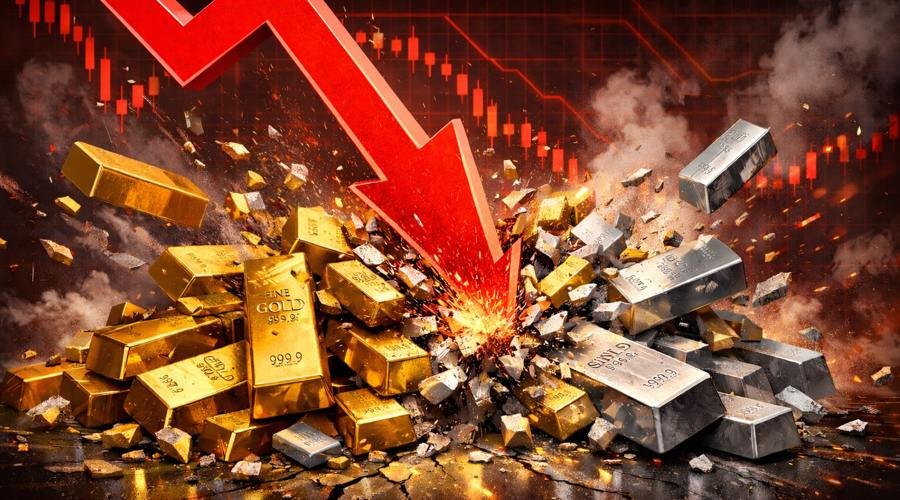
Crash Impact: How Economic Crises Affect Gold, Oil, and Fiat Currency
Market Analysis • Commodities & Currency
Economic crashes do not affect every asset in the same way. Some assets fall immediately, some become safer places for investors, and others react based on policy decisions, demand shocks, and confidence in the financial system. Among the most closely watched during any downturn are gold, oil, and fiat currencies.
These three represent very different parts of the global economy. Gold is viewed as a store of value, oil reflects industrial and transport demand, and fiat currency represents trust in governments and central banks. When a crisis hits, their behavior reveals what investors fear most and where they expect stability to come from.
In every major crash, gold, oil, and fiat tell three different stories: fear, demand, and confidence.
Understanding how these assets react can help investors, analysts, and businesses make better decisions during volatile times. Whether the crisis comes from banking failures, pandemic shocks, debt bubbles, or geopolitical disruptions, these three categories remain central to market analysis.
How Gold Reacts During a Crash
Gold is usually considered a safe-haven asset. During times of uncertainty, investors often move part of their wealth into gold because it is seen as a long-term store of value. Unlike stocks or corporate bonds, gold is not tied to the earnings of a company or the balance sheet of a financial institution.
This makes it attractive during economic stress. When people worry about inflation, banking instability, currency weakness, or falling markets, gold often gains attention. However, gold does not always rise immediately. In the earliest phase of a crash, investors may sell gold temporarily to raise cash. But once panic begins to settle, gold often strengthens as a defensive asset.
- Gold benefits from fear and uncertainty
- It is used as a hedge against inflation and currency weakness
- It can face short-term volatility during liquidity panic
- It often performs better when interest rates stay low
In both the 2008 financial crisis and the COVID-19 crash, gold eventually gained support because investors wanted safety while governments expanded stimulus and central banks increased money supply.
How Oil Reacts During a Crash
Oil behaves very differently from gold. While gold often benefits from fear, oil usually suffers when the economy slows down. That is because oil demand depends heavily on transportation, manufacturing, trade, and industrial activity. When economies weaken, these activities decline, and demand for oil falls.
This makes oil highly sensitive to recessions and demand shocks. If businesses reduce output, flights are cut, shipping slows, or consumers travel less, oil prices can fall sharply. In severe cases, oversupply becomes a serious problem, especially if production remains high while consumption drops.
The COVID-19 crash was one of the clearest examples of this effect. Lockdowns dramatically reduced mobility and economic activity, causing a collapse in global oil demand. Even before that, the 2008 financial crisis also showed how recession pressure can drag energy prices downward.
- Oil usually falls when economic growth weakens
- Demand destruction is one of its biggest risks
- Oversupply can worsen price declines during recessions
- Geopolitical shocks can sometimes push oil higher instead
This final point is important. Oil does not always fall in every crisis. If a crash happens alongside a supply disruption, such as war or sanctions, oil prices may rise even when the economy is under stress. That is why oil needs to be understood through both demand and supply conditions.
How Fiat Currency Reacts During a Crash
Fiat currency is based on trust in governments, central banks, and the broader financial system. During a crash, currency behavior depends on which country is affected, how markets view its stability, and what policy response follows. In global crises, investors often move toward reserve currencies such as the US dollar because they are seen as liquid and reliable.
That means one fiat currency can strengthen while another weakens. Emerging market currencies often come under pressure during global downturns because investors pull money out, trade falls, and external financing becomes harder to secure. Meanwhile, major reserve currencies may benefit from risk-off flows.
Central banks play a huge role here. When they cut interest rates, inject liquidity, or expand asset purchases, they support the financial system, but they can also create longer-term concerns about inflation and purchasing power. So fiat currencies may appear stable in the short term while facing deeper structural questions later.
- Reserve currencies often gain during panic
- Emerging market currencies may weaken under pressure
- Central bank actions shape currency stability
- Inflation concerns can reduce long-term fiat confidence
Why These Three Matter Together
Gold, oil, and fiat currency are often discussed together because they reflect different dimensions of a crisis. Gold reflects investor fear and the search for safety. Oil reflects the health of the real economy and global demand. Fiat reflects trust in institutions and the effectiveness of monetary policy.
When studied together, they provide a more complete picture of what is happening during a crash. If gold is rising, oil is falling, and fiat policy is becoming more aggressive, it usually signals a period of serious economic stress with high uncertainty.
What Investors Can Learn
Market crashes are not only about falling stock prices. They are also about how capital moves between risk, safety, liquidity, and real-world demand. Investors who understand the relationship between gold, oil, and fiat can better interpret what markets are saying during crisis periods.
Gold may protect value, oil may reveal the depth of a slowdown, and fiat may reflect the power or weakness of policy support. Together, they help explain whether a crisis is driven by finance, recession, inflation, or confidence loss.
Key Takeaways
- Gold often benefits from uncertainty and safe-haven demand
- Oil usually declines when economic activity contracts
- Fiat currencies respond to confidence, liquidity, and policy action
- Reserve currencies can strengthen while weaker ones come under stress
- Gold, oil, and fiat together provide a strong lens for crisis analysis
In every major downturn, these three assets help tell the market’s real story. Gold shows where fear is going, oil shows what the economy is losing, and fiat shows how much trust remains in the system. That is why their interaction remains one of the most important areas of financial analysis during any crash.